
-
6258 Penfield Ave, Woodland Hills, CA 91367
6258 Penfield Ave, Woodland Hills, CA 91367

One of the first questions people ask before getting artificial turf is pretty simple: how long will it last?
The honest answer is that there’s no fixed number. How long your turf lasts depends on a bunch of things working together, from the quality of the materials to how it’s installed and looked after.
Knowing what those factors are helps you set realistic expectations and figure out the real value of turf as a long-term investment.
The fibers make a huge difference in how long your turf keeps looking and performing like new. Good fibers bounce back after people walk on them, don’t mat down easily and keep their shape for years. Cheaper fibers flatten quickly, lose their spring and start looking worn much sooner.
Premium artificial turf usually uses advanced polyethylene blends that are soft but strong. They’re made to handle walking, playing, pets and outdoor furniture without breaking down early. With poor-quality fibers, even a great install can start looking tired within a few years.
The sun is one of turf’s biggest enemies, especially somewhere as sunny as California. Without good UV protection, synthetic grass can fade, get brittle and weaken over time.
Quality turf has UV inhibitors built in to protect the fibers from long hours in the sun. They help keep the color, flexibility and strength intact. Turf without enough UV protection might look fine at first, but it can break down much faster, especially in spots that get full sun most of the day.
In the long run, UV-resistant turf keeps looking natural, and that has a direct effect on how long it looks “new” instead of old and faded. Wondering how turf handles our summers? Read how artificial turf performs in California summers.
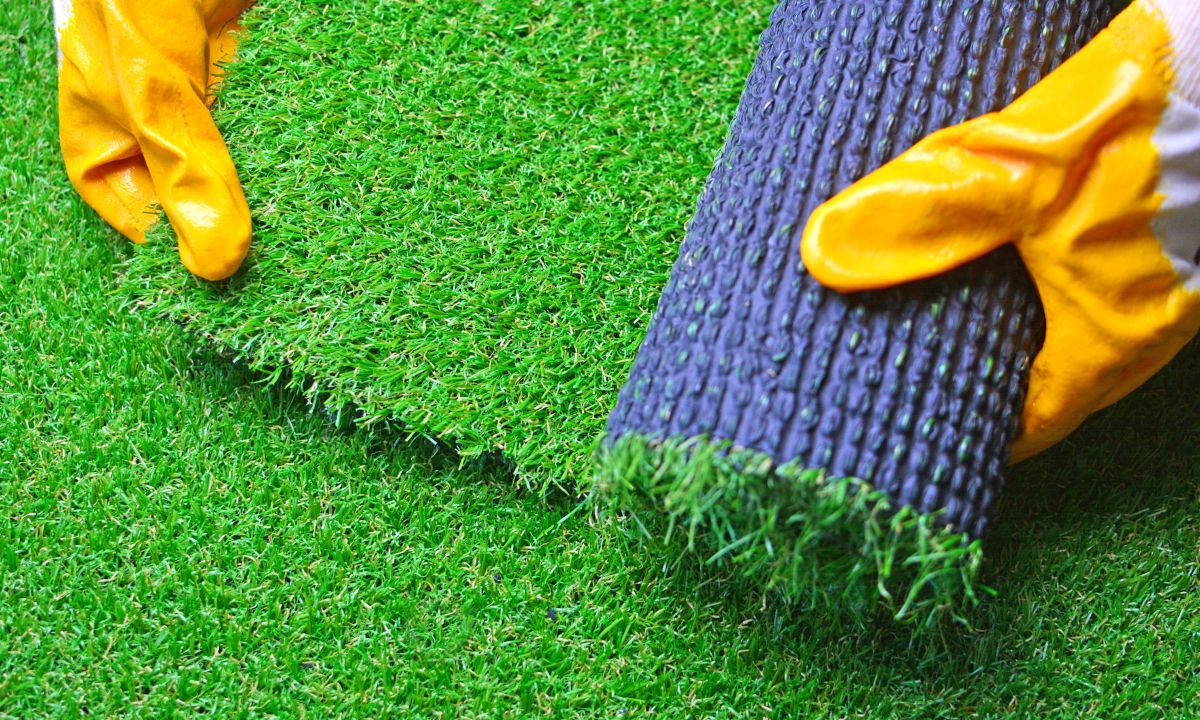
Infill doesn’t get much attention, but it plays a big part in how well turf holds up. It supports the fibers, helps them stand up straight and absorbs some of the impact from foot traffic.
The right infill takes stress off the fibers and cuts down on early wear. It also helps with drainage and keeps everything stable so you don’t get shifting or uneven spots. The wrong infill can lead to flat grass, extra heat and faster fiber breakdown, all of which shorten your turf’s life.
Pick the right infill for your climate, how you use the space and your turf product, and you’ll get noticeably better performance over time. Here’s more on how the layers of artificial turf work.
Even the best turf will fail early if it isn’t installed properly. The install affects everything: drainage, stability and overall durability.
A well-prepped base stops sinking, rippling and uneven wear. Good seam placement keeps sections secure and invisible over time. Proper edge anchoring stops the turf from lifting or shifting.
When installers cut corners, problems usually show up within the first few years, no matter how good the turf is. A professional install, on the other hand, can help your turf reach or even beat its expected lifespan. Here’s our guide on how to choose the right turf installer.
Turf in a quiet backyard will naturally last longer than turf in a busy playground, dog run or commercial space. The more it’s used, the faster the fibers compress and wear.
That doesn’t mean turf is a bad idea for busy areas. It just means your expectations should match. Turf made for sports or pets, paired with the right infill and install, can still perform well for years under heavy use.
Thinking about how the space will actually be used helps you pick the right turf for the job.
On average, well-made turf that’s installed properly lasts anywhere from 10 to 15 years, and sometimes longer. The key thing to remember is that lifespan isn’t decided by one factor. It’s all of them working together.
Spending a bit more on quality materials, good UV protection, the right infill and a professional install usually costs less over the long run. Turf that lasts longer, looks better and needs fewer repairs is worth a lot more than a cheap option you have to replace after a few years. For pricing, see our artificial turf cost guide.
Turf lifespan isn’t just about how long it stays in the ground. It’s about how long it keeps looking good, feeling comfortable and doing its job. Fiber quality, UV resistance, infill, installation and how much it’s used all play a part.
Think about these things from the start, and synthetic grass becomes a reliable long-term solution, not a short-term fix. A little basic care helps too, so check out our artificial turf maintenance guide.
Most quality turf lasts between 10 and 15 years when it’s installed properly and used as intended. In quiet backyards it can last even longer, while busy spaces may show wear sooner.
Turf with good UV resistance is made to resist fading for many years. Turf without strong UV protection can lose its color, get brittle and break down faster in constant sun.
Usually it’s a mix of low-quality fibers, a poor install, the wrong infill, heavy use and lots of sun without UV protection. When these stack up, aging shows up much earlier.
Yes, a lot. The right infill supports the fibers, takes stress off them and keeps everything stable. The wrong infill can lead to flat grass and faster wear.
Definitely. Basic care like brushing the fibers upright, keeping debris off and checking infill levels helps it last longer and look better.
Yes, as long as the turf, infill and install are chosen for heavy use. Just expect these areas to show wear a bit sooner than a low-use lawn.
In most cases, yes. Better turf usually means tougher fibers, stronger UV protection and a longer life, which gives you more value than a cheap product that needs replacing early.

Lorem ipsum dolor sit amet, consectetur adipiscing elit, sed do eiusmod tempor incididunt ut labore et dolore magna aliqua…

February 12, 2025
February 12, 2025
April 10, 2025
April 21, 2025

April 28, 2025