
-
6258 Penfield Ave, Woodland Hills, CA 91367
6258 Penfield Ave, Woodland Hills, CA 91367

When most people think about artificial turf, they think about how the grass looks on top. But how well your turf actually performs depends on what’s underneath it.
California’s weather is all over the place: coastal moisture, Central Valley heat and the occasional heavy rain. That’s why proper layering isn’t optional here. It decides how long your turf lasts, how well it drains and whether it stays smooth or starts falling apart in a few years.
Let’s break down each layer under your turf and why each one matters.
Think of turf like a house. The fibers are the roof, and the layers underneath are the foundation.
If the foundation is weak, even the best turf won’t hold up. Here’s what a properly installed turf system looks like, layer by layer.
What it is: A compacted base made from crushed stone or decomposed granite.
Why it matters: This layer holds up foot traffic and furniture, stops sinking, shifting and uneven spots, and keeps the surface level for years.
If it’s done wrong:
✔ Good base prep is the number one factor in how long turf lasts.
What it is: A permeable layer that moves water away from the turf quickly.
Why it matters in California: Even in drought years, we still get heavy winter rain, sudden downpours and overspray from sprinklers nearby.
Good drainage stops water from pooling, prevents odors from building up and protects the turf backing from moisture damage. Poor drainage, on the other hand, leads to standing water, mud under the turf and materials breaking down faster.
What it is: A fabric layer between the soil and the base.
What it does: It blocks weeds from growing up from below, stops roots from pushing through the turf and cuts down on long-term maintenance.
Common mistake: Skipping the weed barrier to save time or money. It almost always leads to weed problems later, especially in warm areas. If you’re already seeing weeds, check out common artificial turf problems and how to fix them.
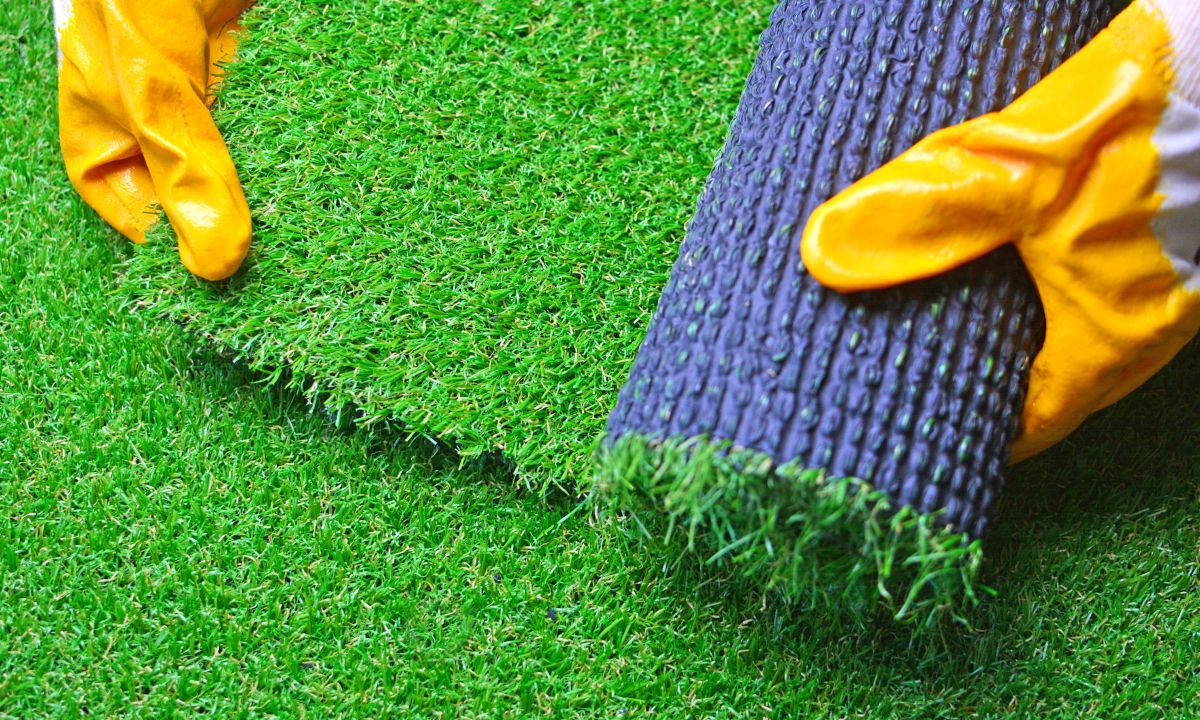
What it is: The underside of the turf that holds the grass fibers in place.
Why it matters: Quality backing drains properly, resists cracking in the heat and holds seams securely.
In hot areas like Los Angeles and the Central Valley, cheap backing can fail faster, especially without good support layers under it.
What it is: Material brushed into the turf fibers after installation.
Common types:
Why it matters: Infill keeps the blades standing up, adds weight and stability, helps drainage and can even lower surface heat. (More on that in does artificial turf get hot?)
The wrong infill means flat grass, extra heat and a shorter lifespan.
When all the layers work together, your turf drains well, handles heavy foot traffic, stays smooth and level, and lasts 10 to 15 years or more. Here’s more on what affects artificial turf lifespan.
But when even one layer is skipped or done poorly, problems usually show up within the first 12 to 24 months.
✔ Compacted base
✔ Working drainage system
✔ Weed barrier installed
✔ Quality turf backing
✔ The right infill
Miss one and performance drops fast.
Most turf blogs talk about grass height, color and how it looks. Very few explain what actually keeps turf working for the long haul.
That’s why understanding the layers gives you a real edge when you’re choosing turf or comparing installers. It helps you ask the right questions. (Here’s our guide on how to choose the right turf installer.)
Great turf doesn’t start with the grass. It starts below it.
If you’re investing in artificial turf in California, make sure your installer focuses on proper layering, drainage and base prep, not just how it looks on day one. A solid foundation means fewer repairs, better performance and years of worry-free use.
That’s the approach we take on every professional synthetic turf installation at Artificial Turf California.

Lorem ipsum dolor sit amet, consectetur adipiscing elit, sed do eiusmod tempor incididunt ut labore et dolore magna aliqua…

February 12, 2025

February 12, 2025
April 10, 2025
April 21, 2025

April 28, 2025